


Understanding your health can be difficult when medical information is spread across routine checkups, individual lab reports, and different healthcare providers. Functional Health takes a more comprehensive approach by bringing together extensive laboratory testing, health data, and clinical guidance to help members develop a clearer picture of their overall health.
The service is designed for people who want more detailed information than they may receive from a conventional annual physical. But with a premium price point and a large amount of health data to interpret, is Functional Health actually worth it? In this Functional Health review, we look at how the service works, its testing approach, technology, clinical support, membership experience, pricing, and overall value.
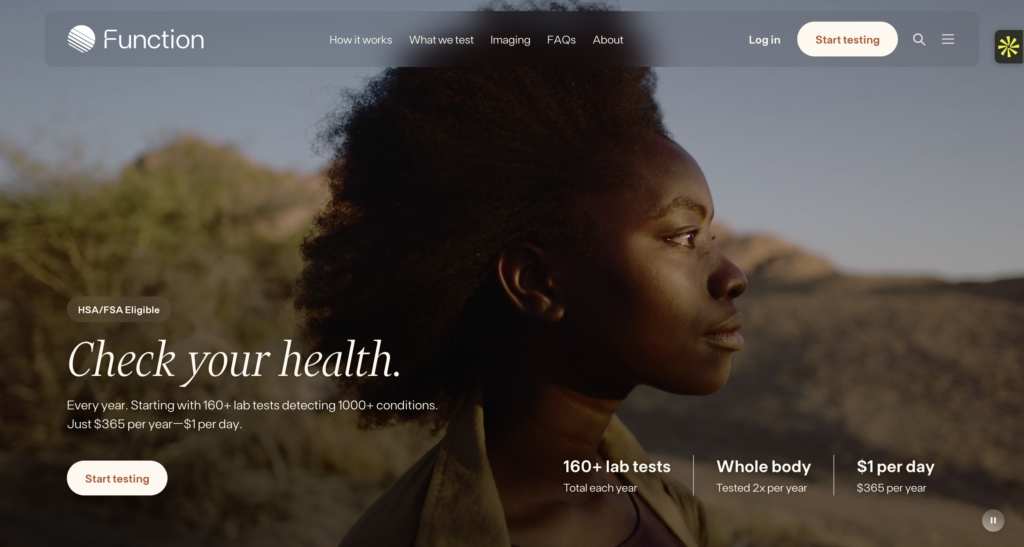
About Functional Health
Functional Health is a health and wellness platform focused on providing members with a more detailed view of their health through laboratory testing and personalized health information.
Rather than concentrating on a single symptom or isolated test, the service takes a broader approach to health data. Members can receive extensive laboratory testing covering areas such as metabolic health, cardiovascular risk, hormones, nutrients, inflammation, and other biological markers.
The information is then presented through a digital platform designed to help users understand their results and track changes over time.
The underlying idea is relatively simple: having more relevant health data may give people and their healthcare professionals additional information to discuss when making decisions about lifestyle and medical care.
What Makes Functional Health Different?
Functional Health differentiates itself through the breadth of its testing and the way health data is brought together.
A traditional physical may involve a relatively limited group of routine blood tests. Functional Health’s approach involves substantially broader testing, depending on the membership and services available.
This can provide a more detailed snapshot of different aspects of health.
Another important part of the experience is longitudinal tracking. Rather than looking at a laboratory result only once, members can use repeated testing to observe how certain biomarkers change over time.
That can make the data more useful for conversations with healthcare professionals, particularly when lifestyle changes or other interventions are being considered.
Comprehensive Laboratory Testing
Laboratory testing is at the center of the Functional Health experience.
The service covers a broad range of biomarkers, with testing designed to provide information about multiple areas of health. Depending on the testing program, these areas can include:
- Metabolic health
- Cardiovascular markers
- Hormones
- Nutritional status
- Inflammation
- Liver and kidney-related markers
- Blood health
- Other biomarkers relevant to overall health
The breadth of testing is one of the most notable aspects of the platform.
However, more testing does not automatically mean better healthcare. Laboratory results need to be interpreted within the context of an individual’s history, symptoms, medications, lifestyle, and other clinical information.
Understanding Your Results
Receiving a large laboratory report can be overwhelming if you do not have a medical background.
Functional Health’s digital experience is designed to make health information easier to organize and understand. Instead of having isolated laboratory reports from different appointments, members can view their information through a centralized platform.
This can make it easier to identify changes over time.
It is important to distinguish between educational interpretation and medical diagnosis. Biomarker results can have many possible explanations, and an abnormal result does not necessarily mean that someone has a particular disease.
Medical decisions should therefore be made with an appropriately qualified healthcare professional who understands the individual’s complete clinical picture.
Tracking Health Over Time
One of the more useful aspects of a data-driven health platform is the ability to compare results over time.
A single blood test provides information about one point in time. Repeated measurements can potentially show whether certain biomarkers are moving in one direction or remaining relatively stable.
This can be useful for people who are making changes to areas such as nutrition, exercise, sleep, weight management, or other lifestyle factors.
However, not every biomarker needs to be repeatedly tested, and changes in laboratory values do not always have a straightforward interpretation. The usefulness of ongoing testing depends on the specific markers, the individual, and the clinical context.
Personalized Health Approach
Functional Health presents its service around a personalized approach rather than a one-size-fits-all health program.
The appeal of personalization is that different people can have very different health priorities. Someone focused on metabolic health may be interested in a different set of markers than someone primarily interested in cardiovascular risk or nutritional status.
Having more individualized information can help create more targeted conversations with healthcare professionals.
At the same time, personalized health recommendations should be evaluated carefully. Not every lifestyle recommendation is appropriate for every person, and laboratory data should not be interpreted in isolation.
Digital Health Platform
The digital platform is an important part of the overall Functional Health experience.
Health information becomes considerably more useful when it is easy to access, organize, and compare. A centralized dashboard can reduce the need to keep track of multiple paper laboratory reports or scattered medical documents.
Digital access can also make it easier to revisit previous results and identify trends.
For users who enjoy tracking their health metrics, having this information organized in one place can be a significant advantage.
Convenience
Traditional healthcare can require separate appointments, laboratory visits, and follow-ups. Functional Health’s model is designed to consolidate a substantial amount of health testing and information into one experience.
That convenience can be particularly appealing to people who are proactive about health monitoring and prefer a more structured approach.
However, the service does not replace conventional healthcare. People still need appropriate primary care, specialist care, preventive screening, and urgent medical attention when required.
Functional Health is best considered an additional health-monitoring resource rather than a universal replacement for the healthcare system.
Privacy and Health Data
Health information is highly sensitive, so privacy is an important consideration when using any digital health platform.
Potential members should review Functional Health’s current privacy policy and terms to understand how personal and health information is collected, stored, processed, and shared.
It is worth paying attention to information regarding laboratory data, account information, communications, third-party services, and any permissions associated with connected digital tools.
Understanding these policies before enrolling is particularly important because health platforms can handle considerably more sensitive information than an ordinary consumer website.
Pricing and Overall Value
Functional Health is positioned toward consumers who are willing to spend more on extensive health testing and ongoing health tracking.
The value proposition is therefore different from that of a standard annual checkup.
A conventional medical visit may provide a smaller set of routine measurements, while Functional Health focuses on collecting a much broader body of health data.
Whether that additional information is worth the cost depends heavily on the individual.
For someone who is highly interested in preventive health, enjoys tracking biomarkers, and wants extensive laboratory information, the service may offer considerable value.
For someone with limited interest in detailed testing or who already receives comprehensive monitoring through their healthcare providers, the additional expense may be harder to justify.
Current membership pricing and included services should be checked directly before subscribing because offerings can change.
Who Should Consider Functional Health?
Functional Health may appeal to adults who are particularly interested in understanding and tracking their health data.
It can be relevant to:
- People interested in preventive health monitoring
- Individuals who enjoy tracking health metrics
- Consumers seeking broader laboratory testing
- People interested in understanding changes in biomarkers over time
- Those who want a centralized digital health dashboard
- Individuals looking for additional information to discuss with their healthcare professionals
People with active medical conditions should coordinate any additional testing or health changes with their healthcare team rather than relying on a consumer health platform alone.
Is Functional Health Worth It?
Functional Health can be worth considering for people who place a high value on comprehensive testing and detailed health tracking.
Its strongest feature is the amount of information it can bring together. Instead of looking at health through a handful of routine measurements, members can explore a considerably broader collection of biomarkers.
The platform can also be appealing for people who enjoy seeing how their health data changes over time.
The main consideration is that extensive testing has diminishing practical value if the results do not lead to meaningful, clinically appropriate action. More information is not necessarily more useful unless it can be interpreted correctly and placed in the context of an individual’s overall health.
Final Verdict
Functional Health offers a data-focused approach to personal health, combining extensive laboratory testing with digital tracking and health information.
Its appeal lies in giving members a broader set of measurements than they may encounter during a conventional routine checkup. For people who are highly engaged with their health and interested in monitoring biomarkers over time, this can provide a valuable additional resource.
At the same time, laboratory results should always be interpreted in context, and comprehensive testing should complement rather than replace appropriate medical care.
Overall, Functional Health is an interesting option for people seeking a more detailed, data-driven view of their health and who value extensive testing and ongoing biomarker tracking. Its value ultimately depends on individual health goals, existing healthcare coverage, and how meaningfully the information can be incorporated into professional healthcare decisions.